KHEM Studios
French Rolling Pins
French Rolling Pins
Couldn't load pickup availability
Here's the plain text version:
French Rolling Pin
Solid hardwood · No moving parts · Three sizes, three species
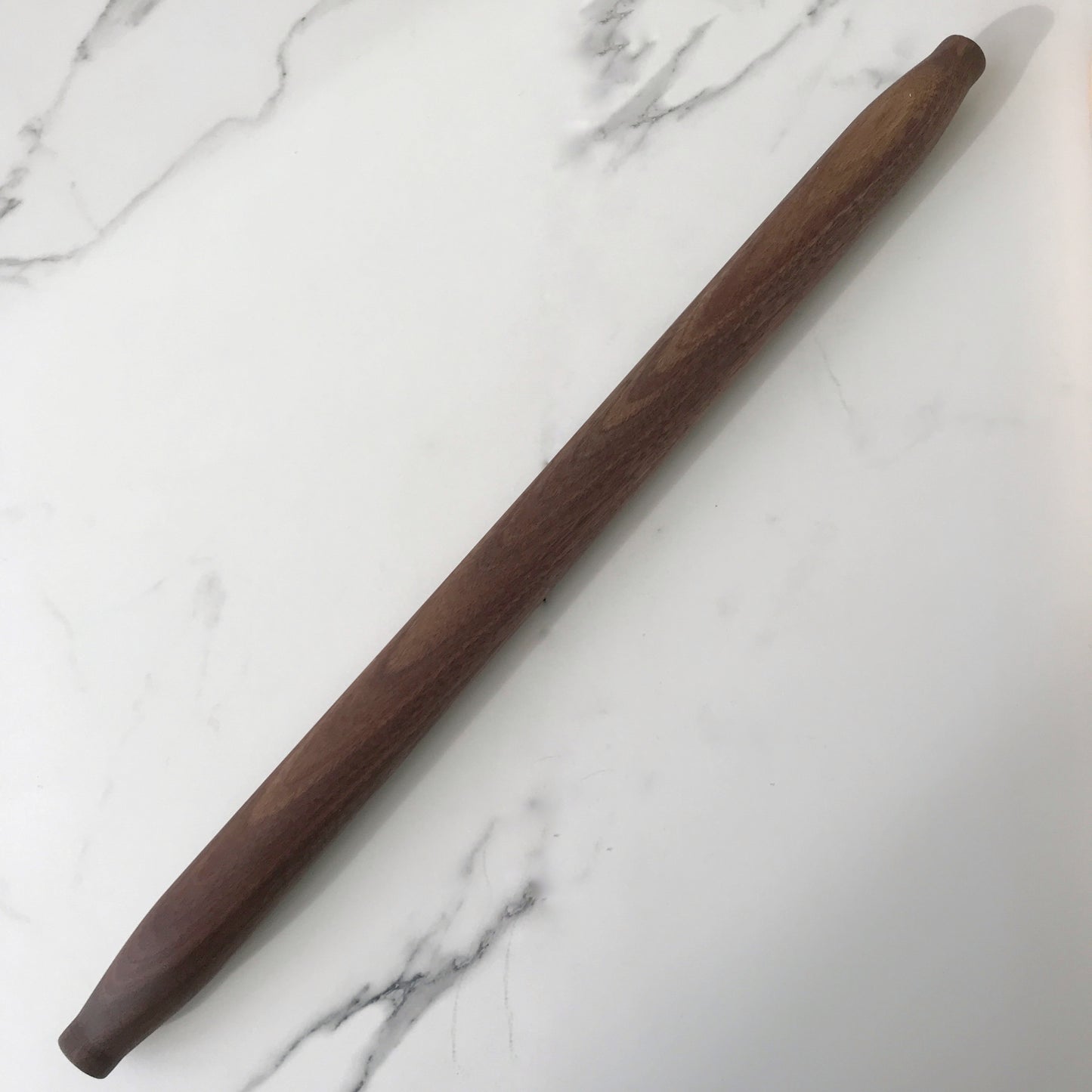
A French rolling pin is the working tool of the serious baker — no handles, no bearings, just a single tapered cylinder of wood that gives you total control over pressure and feel. KHEM's version is turned from the same kiln-dried hardwood we use for our cutting boards and hand-finished with Walrus Oil, making it a tool that improves with use and belongs on the counter, not hidden in a drawer.
Available in maple, walnut, and cherry — each in three sizes — and finished to the same standard as every KHEM board that's been featured in Architectural Digest, the New York Times, and on Oprah's Favorite Things list.
Sizes
Small — 11" · cookies, tarts, small pastry
Medium — 15" · pie dough, pasta, flatbread
Large — 21" · pizza dough, laminated dough, high-volume baking
Wood species
Maple — tight grain, pale tone, extremely hard
Walnut — open grain, deep brown, warm character
Cherry — fine grain, reddish amber, darkens with age
What sets it apart
- Kiln-dried hardwood — dimensionally stable, resists warping across seasons
- No handles, no bearings — nothing to harbor moisture or bacteria
- Hand-finished with food-safe Walrus Oil — same finish as our cutting boards
- Tapered ends give you precision control over pressure and thickness
- Improves with use — the wood surface develops a natural patina over time
Care
- Wipe clean with a damp cloth after use; mild soap if needed, dry immediately
- Re-oil periodically with food-safe mineral oil or Walrus Oil to maintain the surface
- Store horizontally in a cool, dry place — never submerge in water or put in the dishwasher
Each rolling pin is made from natural hardwood and will exhibit unique grain patterns, color variation, and character. No two are identical — this is a feature of the material, not a flaw.
Frequently Asked Questions
What is a French rolling pin and how is it different from a handled rolling pin?
A French rolling pin is a single solid cylinder with no handles or internal bearings. You roll it directly with your palms, which gives you more tactile feedback and finer control over pressure than a handled pin. Professional bakers and pastry chefs prefer them for this reason.
Which size should I choose?
The 11" small is ideal for cookies, tartlets, and small pastry work. The 15" medium handles most everyday tasks — pie crust, pasta, flatbread. The 21" large is best for pizza dough, croissant dough, and anything requiring consistent pressure across a wide surface.
Which wood species is best for a rolling pin?
All three species — maple, walnut, and cherry — are dense, stable hardwoods that work well as rolling pins. Maple is the hardest and most traditional. Walnut has a slightly more open grain and a warmer aesthetic. Cherry is fine-grained and develops a rich amber patina over time. The choice is largely personal preference.
Is the finish food-safe?
Yes. We finish every rolling pin with Walrus Oil, a food-safe blend of mineral oil, beeswax, and carnauba wax — the same finish we use on all KHEM cutting boards. It's safe for direct food contact and needs only occasional reapplication to maintain the surface.
Can I put this in the dishwasher?
No. Like all solid hardwood kitchenware, this rolling pin should be hand-washed only. The high heat and prolonged moisture exposure in a dishwasher will cause the wood to crack, warp, and strip the finish.
How often does it need to be oiled?
Oiling frequency depends on use. A good rule: if the wood looks dry or feels rough, it's time to oil. For regular home bakers, this is typically every few months. Apply a thin coat of food-safe mineral oil or Walrus Oil, let it soak in for a few hours, then wipe away any excess.
Will the wood grain on my rolling pin look exactly like the photos?
No — and that's intentional. Each rolling pin is cut from a different part of a different tree, so grain patterns, figure, and color tone will vary. Some pieces will be straighter-grained; others will show more character. What doesn't vary is the species, the finish, and the quality of the hardwood.